AUC students explore ‘Social Capital’ at the Stedelijk Museum
8 July 2026
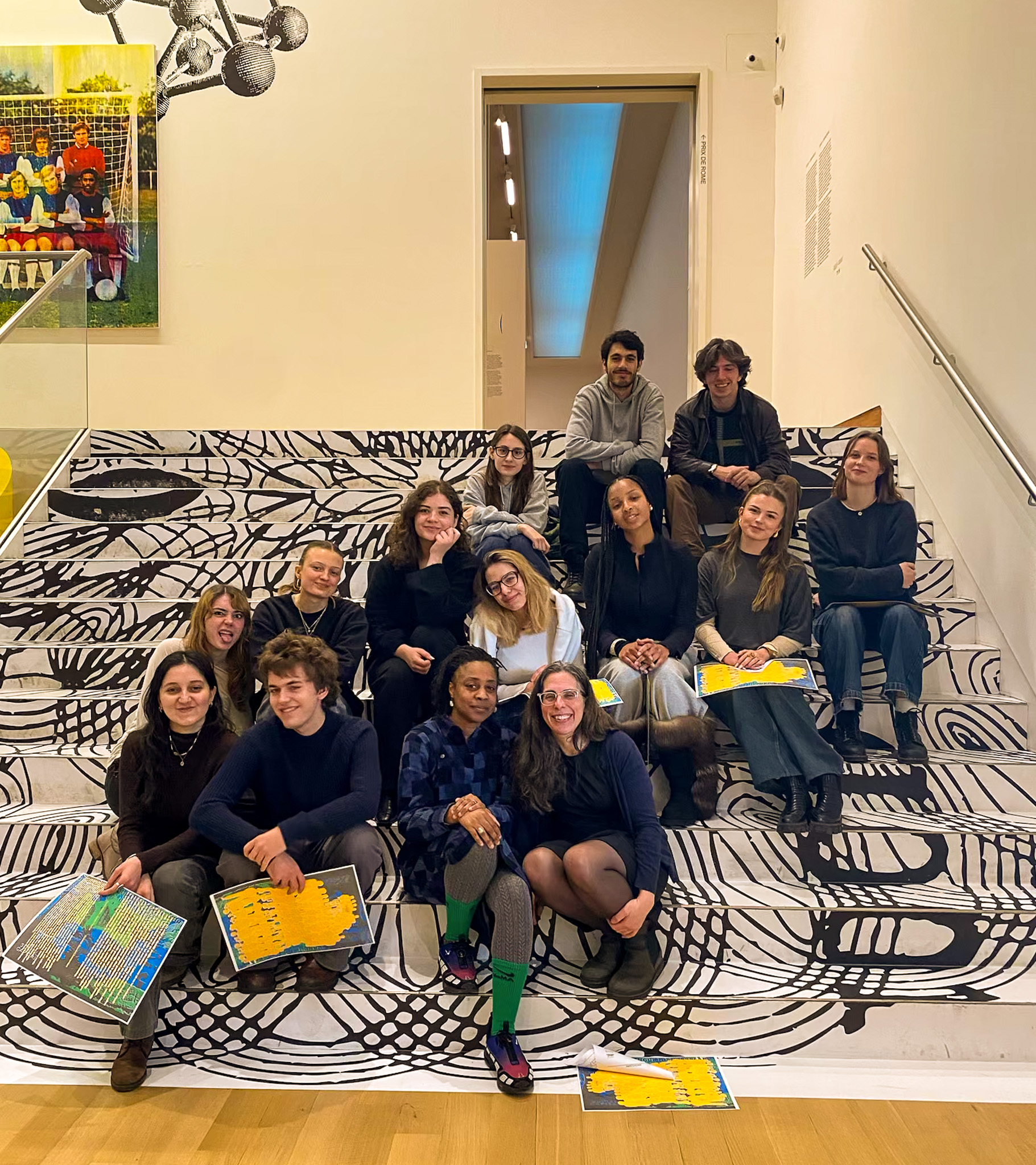
The excursion was organised as part of the 200-level Contemporary Art course, an academic offering designed to expand upon introductory art history surveys by questioning the parameters of contemporary art and contextualising it within the broader evolution of the discipline.
The course encourages students to analyse global artistic practices thematically, organising topics around medium, approach or idea rather than through a traditional geographical lens. A core objective of the is to confront complex issues such as postcolonialism, multiculturalism, identity and the politics of the cross-cultural gaze. By drawing upon recent scholarly research, the course offers a culturally inclusive, global look that critically reflects on a Eurocentric historiography.
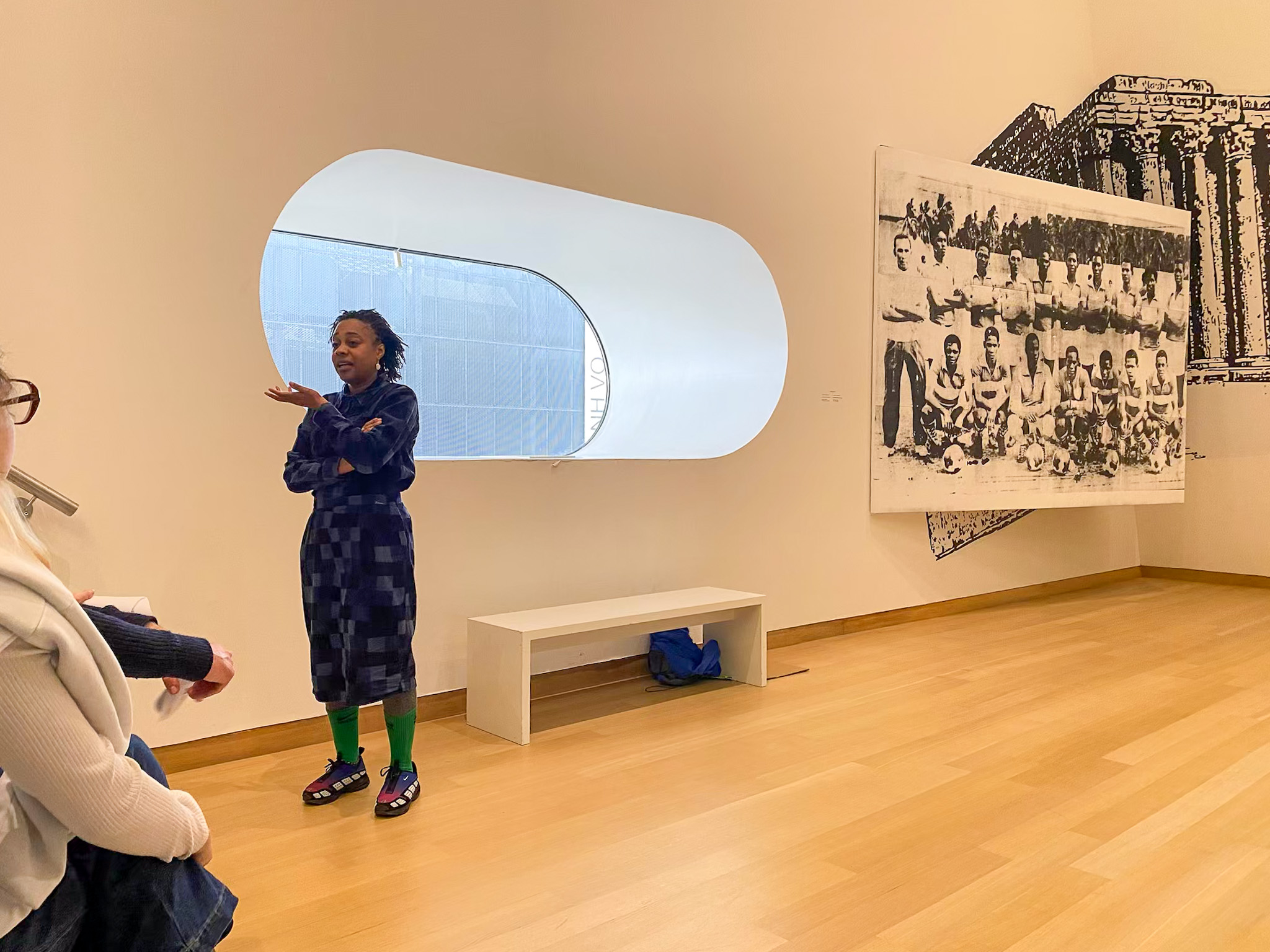
Inside the exhibition Social Capital by Farida Sedoc
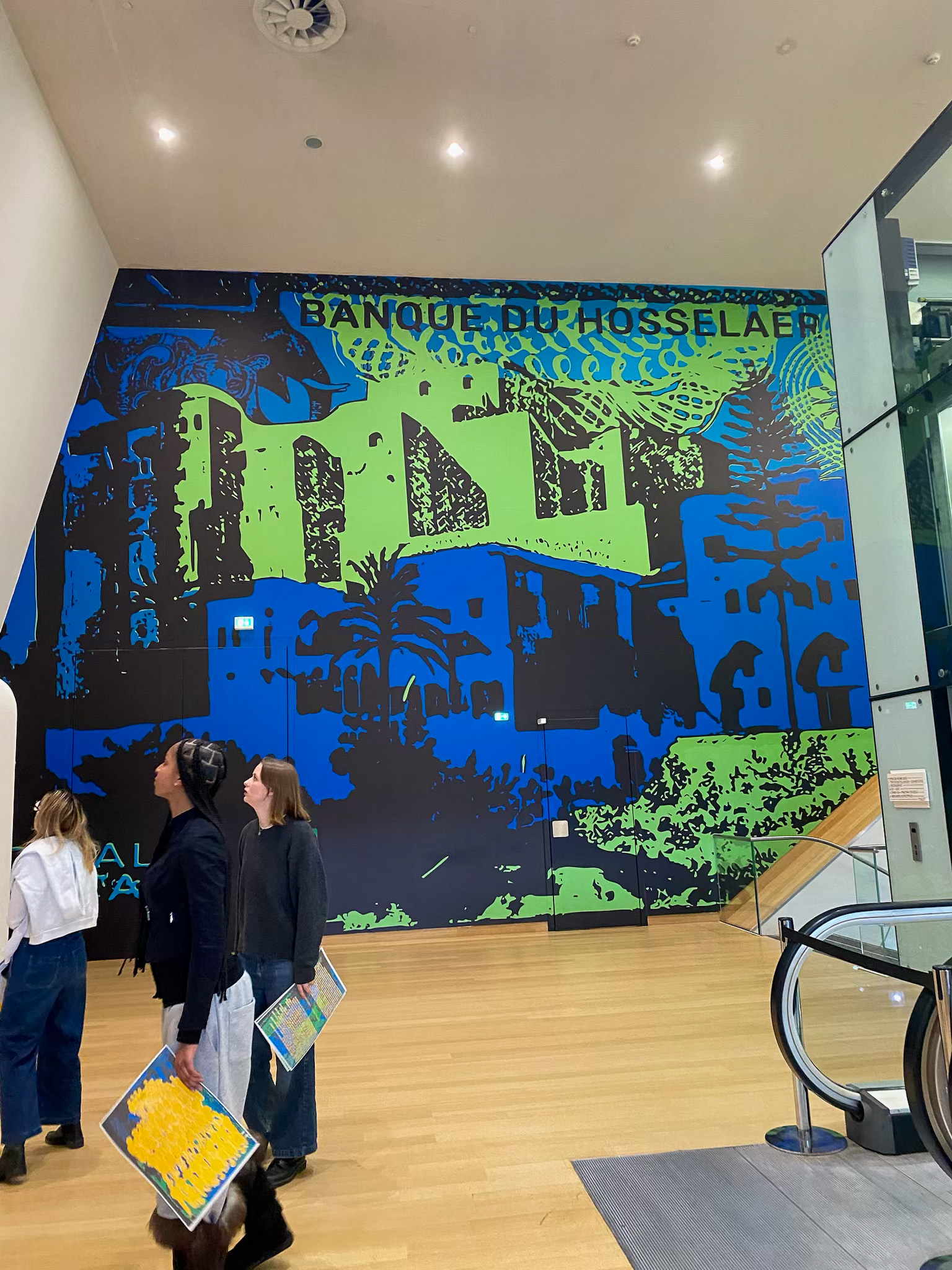
During the visit, Sedoc spoke directly to the students about her monumental triptych, Social Capital, currently on display on the building's mezzanine as part of the Stedelijk Museum's IN SITU series. The site-specific installation comprises three large-scale screenprints on canvas, developed from group portraits selected from Sedoc's personal archive to visualise the strength of collectivity and a shared sense of belonging. In addition to the canvas works, the installation features custom-designed wallpaper based on global currency motifs.
Sedoc shared insights into her creative process and the conceptual framework of her practice, which frequently utilises photography, graphic design and textile techniques to explore multi-voiced narratives derived from protest movements and countercultures. She discussed how her work navigates themes of intersectionality, heritage and economic inequality, referencing her frequent use of the term "hosselar" (derived from "hustler") to interrogate the profound influence of the monetary economy on communities.
Connecting theory with artistic practice
The visit provided students with a practical case study illustrating the fluid contexts in which contemporary artists operate, as well as the direct relationship between works of art and their sites of execution. By looking at how Sedoc's work maps the networks of relationships and mutual trust that bind communities together, the session encouraged students to connect theoretical frameworks of cultural identity and socioeconomic critique with real-world, localised artistic production.