Lynn Engelberts
Class of 2019, Sciences
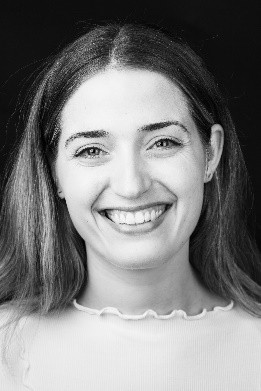
What steps did you take after graduating from AUC?
I pursued a 12-month master's degree in mathematics (MFoCS) at the University of Oxford. After that, I took additional Mastermath and ILLC courses at the University of Amsterdam as part of ILLC's Logic Year. I then completed a mini research project with Ronald de Wolf, after which I was fortunate to start a PhD with him and Léo Ducas as my promotors.
What skills did you gain at AUC that are useful for your future?
I developed strong writing and presentation skills, both of which are essential for research, and significantly improved my English. The wide variety of courses taught me how to get up to speed quickly with new topics and gave me a broad academic background. Advanced courses in mathematics and logic provided a solid introduction to writing mathematical proofs. I also learned to program, in particular in Python.
How did you experience choosing AUC? What were your doubts or dilemmas?
I was initially unsure whether I would enjoy such a broad program and whether it would allow me to take enough mathematics courses. However, the flexibility of the curriculum ultimately convinced me.
Why did you ultimately choose Liberal Arts & Sciences in Amsterdam? What was the deciding factor?
I really liked that it was an international and relatively diverse program (for Amsterdam). It was also well promoted, and I appreciated that it had a selection procedure, which suggested that admitted students would be motivated. I also liked that it was somewhat encouraged to go on exchange. The main deciding factor, however, was that it allowed me to take courses in mathematics, programming, economics, foreign languages, neuroscience, and law (although I eventually didn't take courses in the latter two areas). In hindsight, I was somewhat too optimistic about how many courses I would be able to take.
How did you find student life in Amsterdam? And how did you balance studying, work, and free time?
It was great, especially because AUC students do not have any housing issues and form a very open and welcoming community that makes it easy to make friends (who are living next door!). There were plenty of social events, and it was great to have an affordable gym nearby.
What advice or tips do you have for students who are interested in your field?
Mathematics and programming are skills that develop over time. You benefit from taking as many relevant courses as possible and, importantly, from spending time on exercises to build intuition. That said, you should not be discouraged if you did not do a bachelor's degree in mathematics: several of my research colleagues didn't and are excellent researchers. Ultimately, what matters most is intrinsic motivation for your research topic; that interest will carry you through the more difficult parts. I also recommend choosing your supervisors carefully and selecting thesis topics you genuinely enjoy; this can make a big difference!